Showing posts with label Outside Learning. Show all posts

Sunday, April 28, 2013

Has Syria Crossed the "Red Line?" Should the US Intervene?

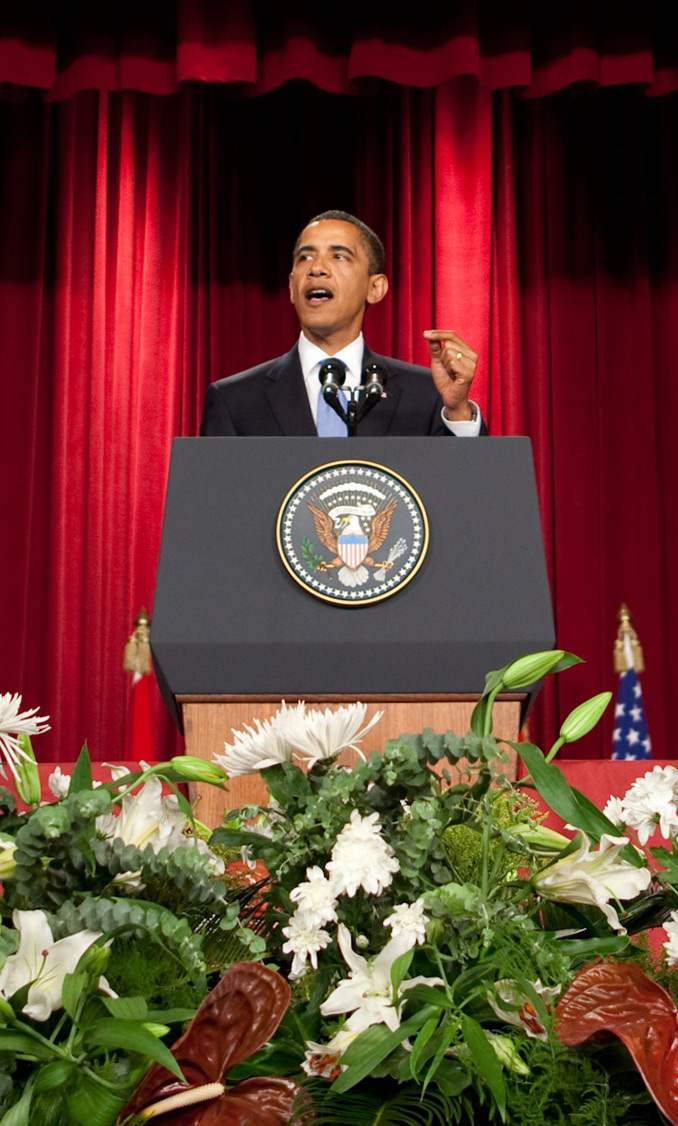
On March 21 of this year, President Obama declared that “We will not tolerate the use of chemical weapons against the Syrian people.” Over the past week, reports are coming in that Syrian President Bashar al-Assad may already have crossed this line, although there is reasonable doubt about this.


Remember, in class we discussed threats, deterrence, and how credibility is necessary for these to be successful. Read the pieces linked above and answer the following questions for participation credit:
  1. Do you trust the intelligence that indicates the use of chemical weapons by Assad's government? Why or why not?
  2. If so, should the US back up the threat posed by the Obama Administration? Or should we trade a bit of credibility in exchange for staying out of yet another conflict in the Middle East?

Friday, March 8, 2013

Online Discussion for Spring Break

I didn't find anything interesting from the Economist that I wanted to share on the blog, so I'm sharing this article about the latest threats emanating from the Democratic People's Republic of (North) Korea. From CNN:
A day after the isolated regime in Pyongyang had threatened a possible "preemptive nuclear attack" -- something analysts say they think it is unlikely and currently unable to do -- its official news agency reeled off a number of agreements with South Korea that it said would no longer apply.
One of those agreements is the ceasefire that has kept the Korean War on pause since 1953 (the two states are still technically at war).

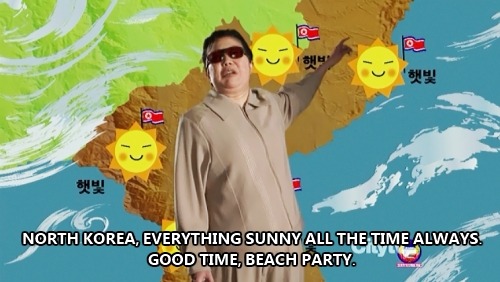
Comedienne Margaret Cho plays Kim Jong Il on NBC's 30 Rock

Clearly, Kim Jong Un is writing checks he can't cash--North Korea is far weaker than South Korea, not to mention China and the United States--but that doesn't mean he can't do a whole lot of damage.

Does that mean that Kim is being irrational? What cognitive shortcuts and psychological crutches might be leading Kim to make these threats? Might there be a benefit to such irrationality? Read the article and comment for participation points.

Monday, February 18, 2013

UAE Helping Joplin Rebuild, Transform

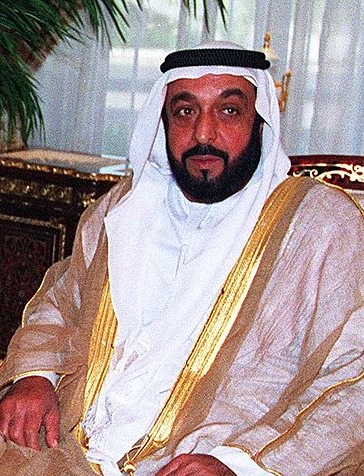
UAE President
Khalifa Bin Zayed Al Nahyan
Photo credit: Wikipedia
According to a recent article in the Washington Post, Joplin, MO is recovering from the devastation of the May 2011 tornado with help from an unlikely source--the United Arab Emirates.

The UAE is spending millions to help the Joplin School District "think big," funding such initiatives as replacing the books (lost in the twister) with MacBooks. While Joplin received millions from the US government for disaster recovery, this is nevertheless an example of a shift in foreign aid disbursement.

From WaPo:
Motivated by the same principal reasons that the U.S. government distributes foreign assistance — to help those less fortunate and to influence perceptions among the recipients — the handouts mark a small but remarkable shift in global economic power.
How does what's happening in Joplin reflect a shift in global power, and what types of power are involved? Is it a good thing that Joplin is taking money from the UAE to recover?

Read the article and share your (reasoned) thoughts in the comments for participation credit.

Sunday, January 27, 2013

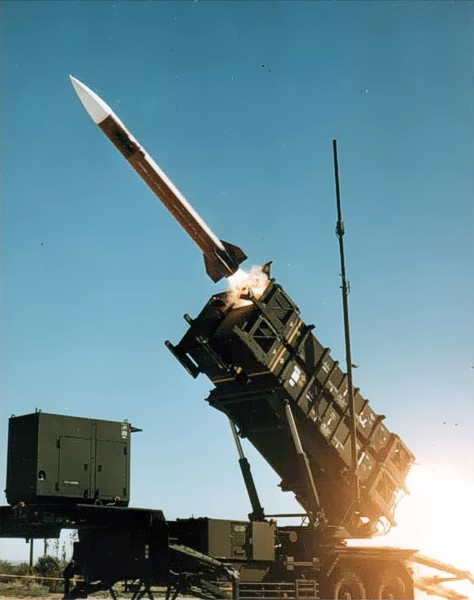
NATO Deploys Anti-Missile Tech to Turkey-Syria Border

Source: Wikipedia
According to RT, NATO--the alliance that the US built to counter the Soviets in the early years of the Cold War--has deployed Patriot anti-missile technology to the Turkey-Syria border.

The deployment is ostensibly to insulate Turkey, a NATO ally, from the violence in Syria (which did briefly spill over into Turkey last fall).

The deployment raises questions about the value of the NATO alliance. Without a Soviet threat, NATO must find other threats to respond to or fade into irrelevance. But is it good for the US to be entangled in an alliance that could draw the nation into yet another conflict in the Middle East?

Read the article, and share your carefully considered and factually supported opinion for participation points.

Monday, January 14, 2013

US, Russia, and the Tough Road Ahead

Russian President
Vladimir Putin
Image credit: Wikipedia
Russia is back off the mat and playing a major role in international politics once again.

While not the existential rival that they were during the Cold War, many of President Vladimir Putin's policies have squarely opposed US intervention in areas such as Iran, Syria and North Korea.

Anne Gearan at the Washington Post argues that Russia's foreign policy could pose serious problems for President Obama's second-term agenda.

Read the article, and decide whether Russia's actions exemplify realism or liberalism. Explain why for participation credit.